People often ask how Life Backup Plan got its name.
The answer begins with my career in information technology and a lesson about backups that I heard more than two decades ago.
In Information Technology, Backups Are Essential
I have spent a significant part of my career working in information technology, or IT. In that world, backing up important information is not optional.
Companies routinely back up their systems and data, often in multiple places. A backup stored beside the original system is not enough. A fire, flood, equipment failure, cyberattack, or other disaster could destroy both at once. That is why responsible organizations create redundant backups and store copies away from their primary location.
The goal is simple: if something happens to the original system, the information survives and can be restored.
In the spring of 2002, I attended a Storage Networking International Association (SNIA) conference in Palm Desert. It was approximately seven months after the September 11th attacks, and one speaker shared a story I have never forgotten.
The Off-Site Backup That Saved a Company
The speaker worked at Compaq, then being acquired by HP (Hewlett Packard), but the story applies to a different, unnamed, company. After months of cost justification and meetings, upper management reluctantly agreed to repurpose some older computers and create an off-site data center. The company’s primary office was in Manhattan, and this would create an information backup at a geographically separate location.
He received the approval to establish that off-site backup only a short time before September 11.
The company’s Manhattan office was obliterated in the September 11 attacks. The physical office, its equipment, its paper records, and everything located there were gone.
Its data, however, was not.
Because the company had backed up its intellectual property, trade secrets, customer files, human resources information, and institutional knowledge at another location, it could restore those systems quickly and continue operating. The primary location had been lost, but the information the company needed to move forward had survived.
That story remained with me because it demonstrated exactly what a good backup plan is supposed to do: ensure that when something happens, the loss of one person, place, device, or system does not mean the loss of everything. Backup Plans are not intended to prevent disaster, they are intended for disaster recovery.
What Is the Backup Plan for a Person?
Although I am a woman, I think I must've been a Boy Scout in a former life, because I got the, "Be Prepared," motto early on.
When it came to my own life, and those of my cats, I've long espoused the philosophy, "An ounce of prevention is worth a pound of cure."
I began asking, "If something happens to me, what is my backup plan?"
What happens if I am injured, unconscious, hospitalized, missing, incapacitated, or otherwise unable to communicate?
How long might I lie on the floor before someone knows something is wrong?
How would someone get notified that something is wrong with me?
How will I get help?
How will the right people get into my home?
Who will take care of my cats?
How will first responders know my vital information?
How will healthcare professionals get my personal health information?
If I am unable to speak for myself, how will someone find my advance directive, DNR, or durable power of attorney for healthcare?
If I die, how will the people I leave behind know my final wishes, where my important documents are located, or even who should receive something personally meaningful, such as my beloved grandmother’s silverplate utensils?
How will the people I leave behind know who has agreed to care for my cats, and how to reach them?
Most people have at least some of this information. The problem is that it is frequently scattered among paper files, phones, computers, patient portals, email accounts, apps, family members, attorneys, financial institutions, and healthcare providers.
When an emergency occurs, the person who knows where everything is may be the very person who is unavailable.
That is not a reliable system.
A Backup Plan for Your Life
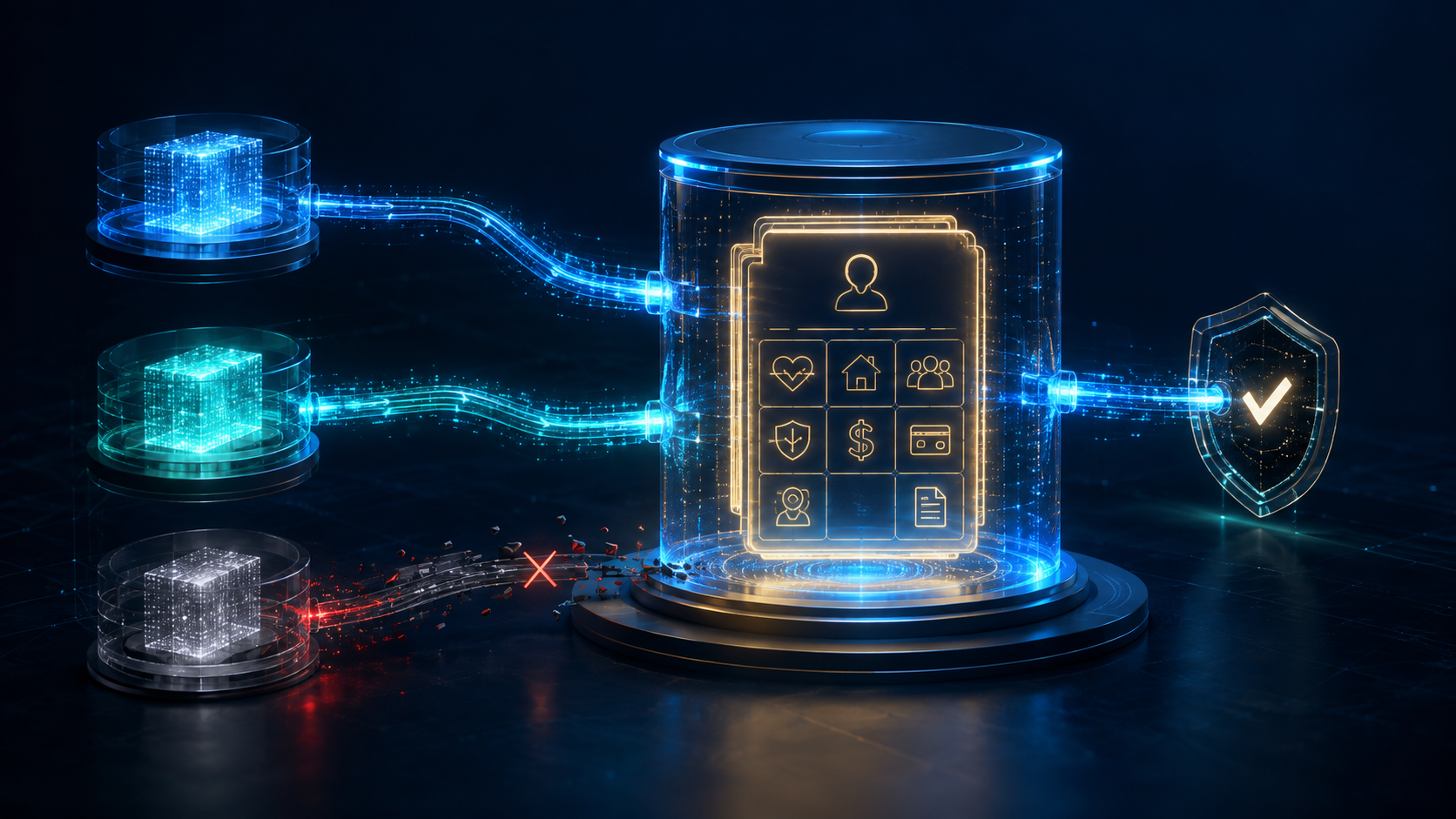
Life Backup Plan grew from the idea that people need the same kind of preparation and redundancy that organizations use to protect their essential information.
Your backup plan should help ensure that the right information can reach the right people when you cannot provide it yourself. It should help answer the practical questions that arise during an emergency, illness, hospitalization, caregiving situation, or death.
That is why I named the app Life Backup Plan.
It is not simply a collection of records. It is a backup plan for the information, instructions, contacts, and resources that help others protect you, care for you, and carry out your wishes.
Building a More Complete Life Record
The Life Backup Plan available today represents only part of the larger platform we are building.
Our goal is to bring health, safety, emergency, caregiving, and critical-document information together in one secure and accessible place. Instead of forcing individuals and families to serve as the systems integrators for their own lives, Life Backup Plan is designed to create a unified record that can support the whole person.
The platform includes tools for emergency contacts, health information, automated check-ins, help requests, home-access information, caregiving coordination, and critical documents. Many additional capabilities are planned as Life Backup Plan continues to grow.
The technology will evolve, but the principle behind the name remains the same:
Hope for the best. Plan for the worst. Make sure the information people may need survives and remains available.
Because your life deserves a backup plan.
To explore the platform and see its current and planned capabilities, visit the Life Backup Plan features page.