The origins of connectedness and community assistance
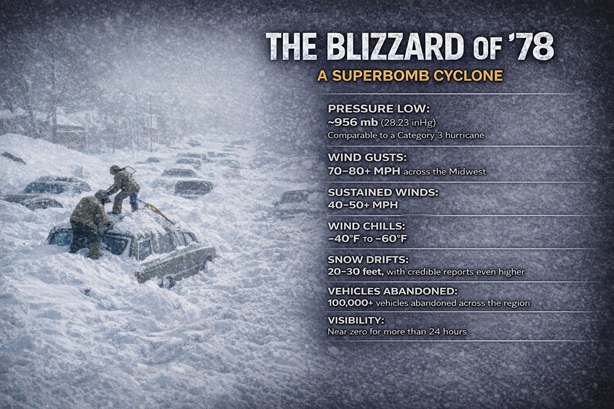
Today marks the 48th anniversary of the Blizzard of ’78. For anyone who lived in the Midwest at the time, it’s an event that’s indelibly etched into memory. Much has been written over the years about the wind, the snow, the road closures, and the weeks of school cancellations — and all of that is true.
Reflecting on it now, what stands out most to me, however, isn’t the weather.
It’s the community and connectedness that carried people through it.
I had just turned fifteen and my family lived in a large subdivision about six miles outside the city limits of Muncie, Indiana. We had moved there from Fort Wayne about eighteen months prior. Our Ft. Wayne home was far more urban. Our Muncie home was on the edge between suburban and rural.
On the other side of the western country road that bounded our neighborhood were cornfields as far as the eye could see. Central Indiana being as flat as it is, there was nothing to stop the wind, nothing to slow the drifts. Most of the houses were single-story, and the snow piled up without measure.
Walls of Snow
On the first or second morning of the Blizzard, I remember waking, and looking out my west-facing bedroom window. I was greeted by a wall of white: a solid wall of snow that had drifted up onto the roof of our home.
At 15, you don’t realize the history that had been made.
The roof of my high school partially collapsed under the weight of the snow. I had three consecutive weeks off school, that we never had to make up. Being ~ 15 years before the Internet even existed, much less the technology with which to deliver them, there were no online classes. Just days and days of sleeping late and playing in the neighborhood in the unending snow. We even had a makeshift skating rink nearby: one of the water hazards on the nearby golf course had frozen over.
Being not in the city, and not in the nearby town, either, we were, if not last, close to the last area to get plowed. Just getting to the main road out of the subdivision required a Herculean effort. When I was finally able to return to school, only one lane of the country roads bounding our neighborhood was plowed. And plowed it was. The snow had been plowed and piled up, such that it was taller than the school bus. It was a roofless tunnel we were driven through to get to school.
Grocery Run
Recognizing this, some people I’m not even sure we knew, went door to door, knocking and stating they were going for groceries. The nearest full grocery store was about six miles away into Muncie, and that’s where they were headed. I don’t remember whether they had a four-wheel-drive truck or were using snowmobiles. The idea that someone could travel six miles by snowmobile, across major roads that normally would have long been plowed, was unfathomable. In the decades before everything was online, it was impossible to know if, indeed, the roads in Muncie still had enough snow on them to safely use a snowmobile. We didn’t even have a local TV station. Everything came out of Indianapolis.
Without thought, my dad handed them cash and a list. A few hours later, they came back with groceries and change.
No contracts.
No tracking.
No apps.
Just community connecting with community.
It wasn’t until many years later that I realized the enormity of the storm, and read the many stories, of deaths, of so many people stranded, and of people across the Midwest, giving shelter to strangers to get them out of the weather until they could safety travel again. This was what I grew up with. This is who I am.
Understanding Rural Health
Our neighborhood was largely comprised of people who worked in nearby auto plants or their subcontractors, at Ball State University, in construction, in law enforcement, or as a teacher, nurse, or bookkeeper. It wasn’t where doctors lived. Had there been a medical emergency, help would have been virtually impossible to get.
As the years went on, I realized how very lucky we were. While I’m not sure I’d have thought of it at the time, the mom of one of my best friends, we’ll call her Polly, was an RN. She was three blocks away through several feet of snow, raging wind, and life-threatening temperatures. Nonetheless, that was the closest we had to medical help.
Surgery Recovery
Many years later, I found myself not buried in snow, but buried in surgery recovery limited my mobility and my independence. My family was now 2000 miles away, and I was forced to ask for help. I needed a ride to and from the hospital, to get groceries, and to get gear. Community showed up. A couple people drove me to appointments. someone loaned me a rollator, another gave me a tub / shower transfer bench. Someone handed me cash when I needed it, me having left my debit and credit cards, along with my car, at a friend’s 30 miles away. They trusted I’d make it right, and I did.
Although I lived in very populated areas during these times, I still felt how lucky I was, and how fragile support can be. I know that most people do not live in large metropolitan areas with rideshare and grocery delivery services. In an era of seemingly endless connection to our phone, trips over the past few years have hammered home just how disconnected many people are, even in perfect weather.
That realization is the foundation of the community assistance features in Life Backup Plan. My goal was never to replace emergency services or formal systems. It is to surface existing help: medical skills, assistance items, and human support, before everyday situations escalate into emergencies, because emergency services or formal systems can’t arrive in time, or at all.
Not everyone lives ten minutes from a hospital.
Not everyone can get a rideshare at their home within 7 minutes.
Life Backup Plan is Born
But most people live near someone who can help, and will. Instead of hoping someone sees your request, waiting hours or days for the right reply, and extensive commenting or messaging back and forth, we simplified getting and offering help within your community.
The Blizzard of ’78 didn’t inspire an app.
It shaped my worldview on safety, resilience, and community.
Life Backup Plan grew out of that. Preparedness isn’t just for emergencies. It’s about everyday life, in perfect weather or not, and connecting with the right people and the right resources – human or otherwise - at the right time.